Manchester, NH, USA I, 2020
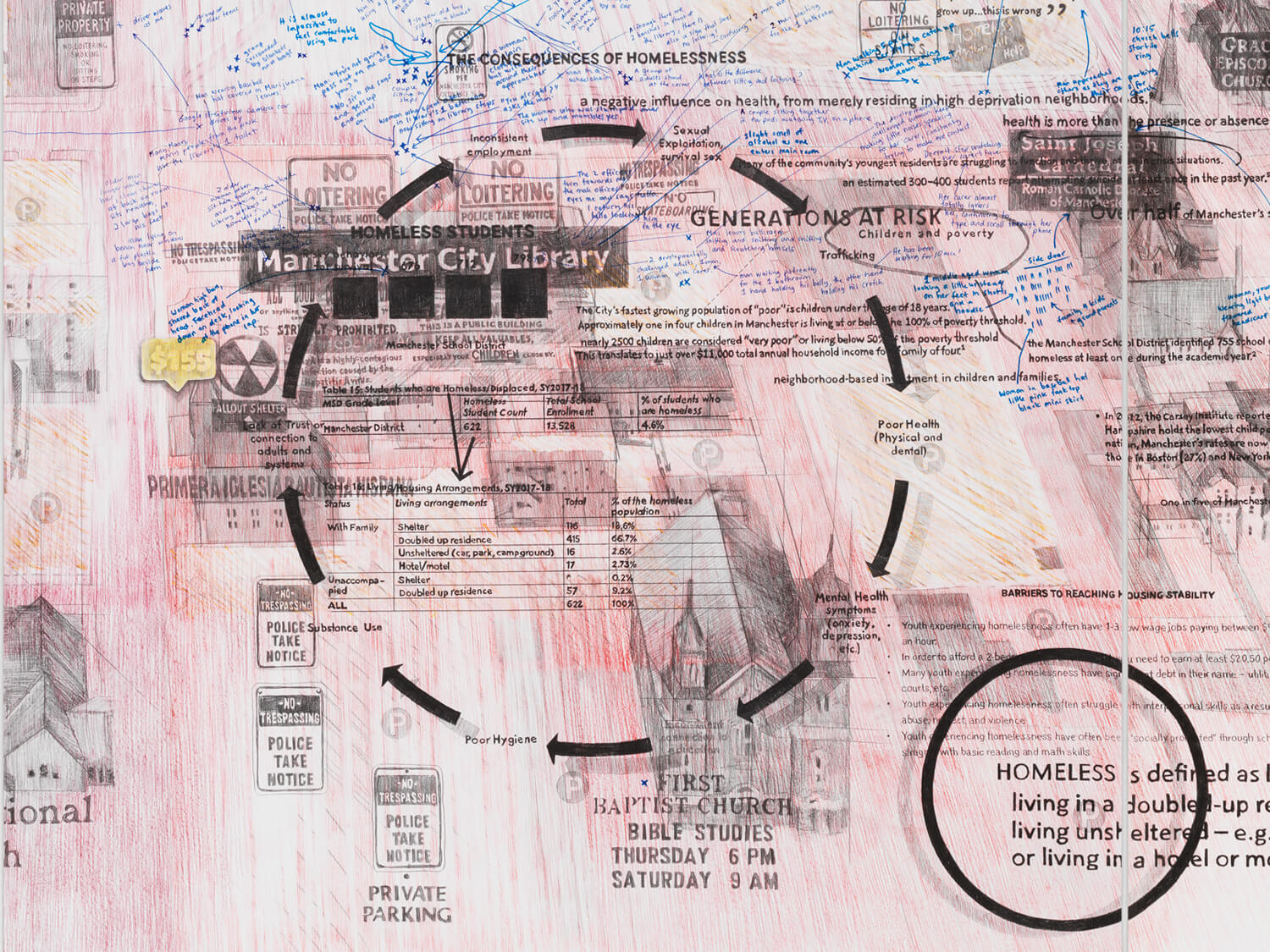
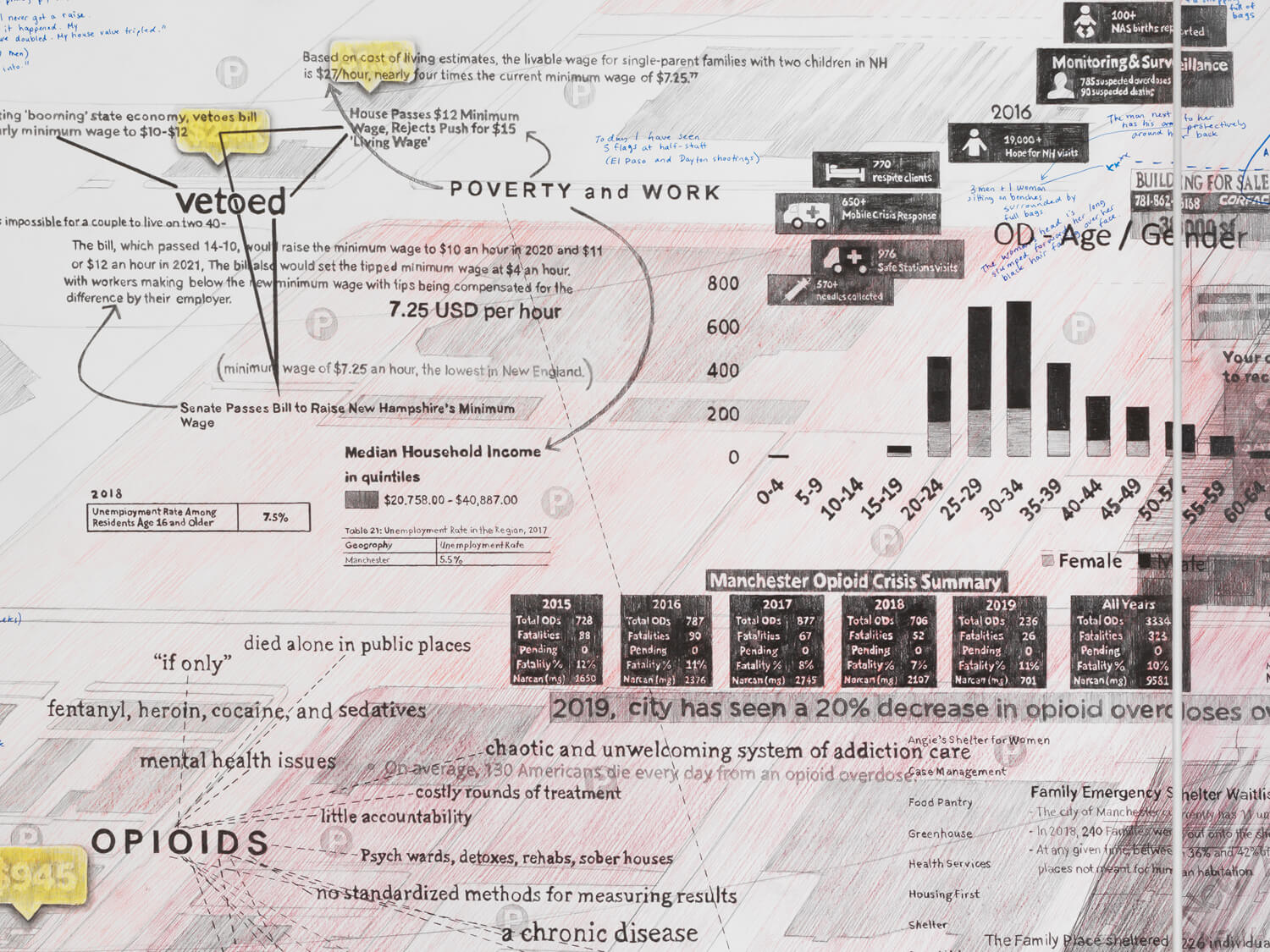
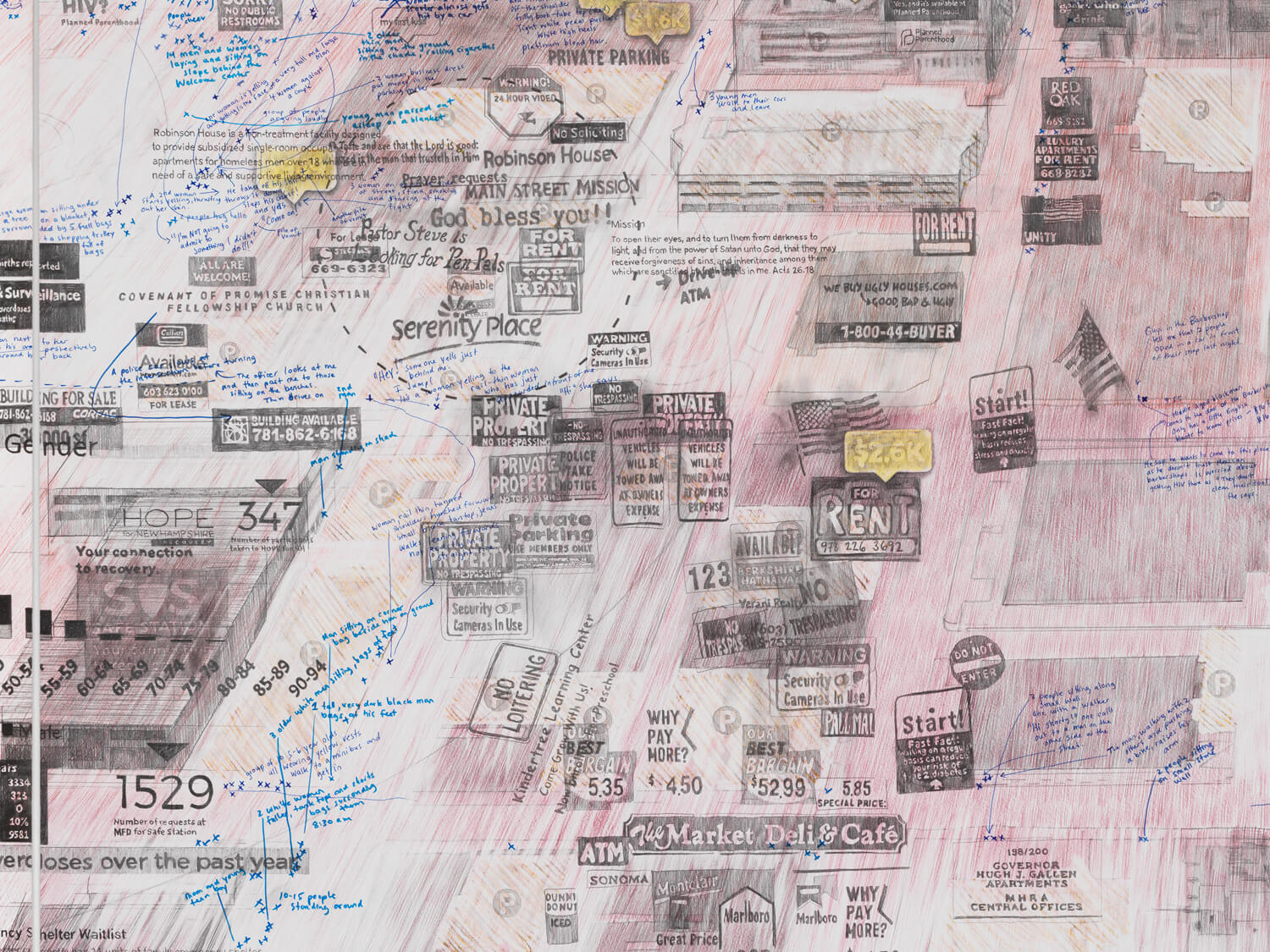
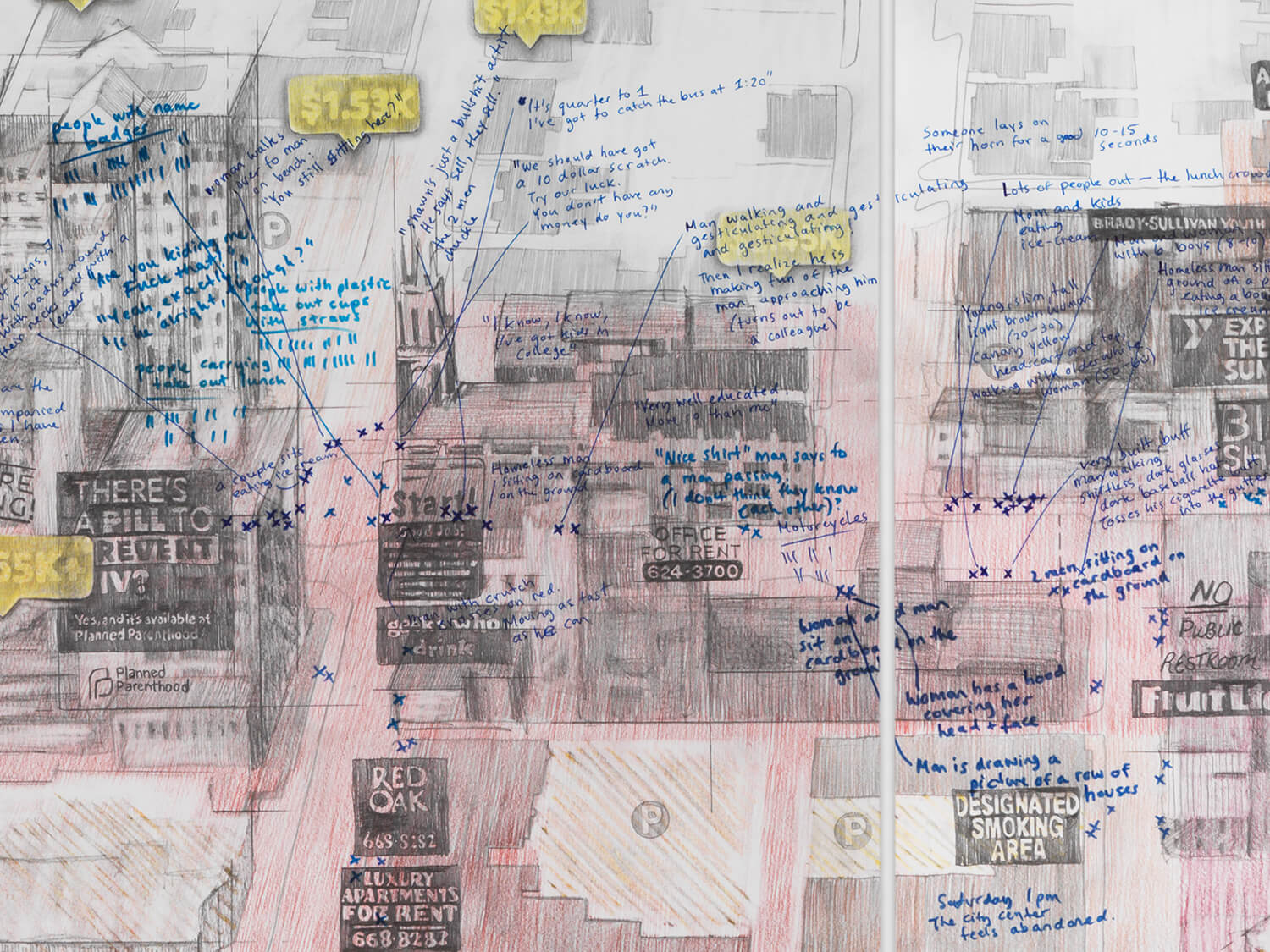
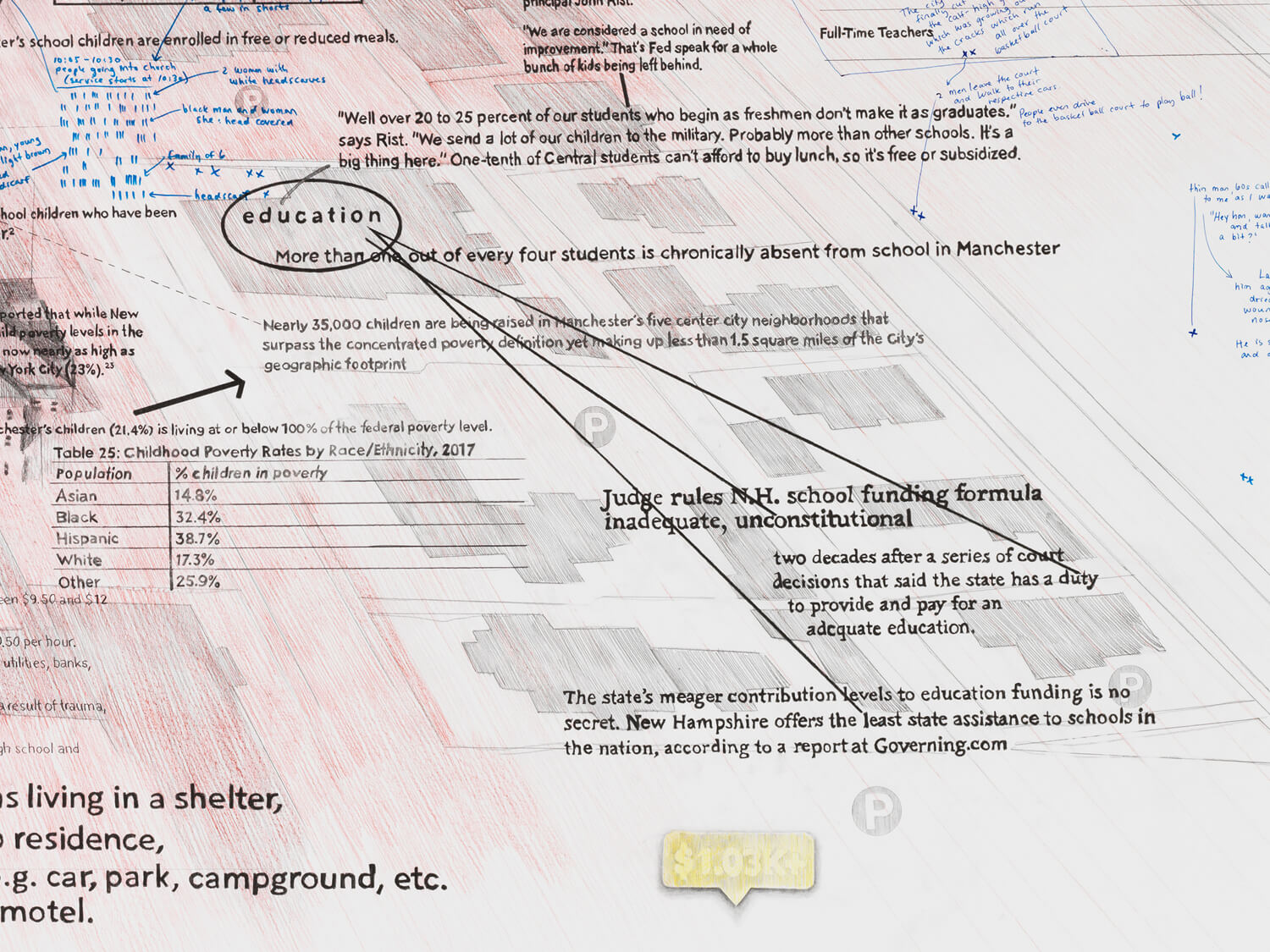
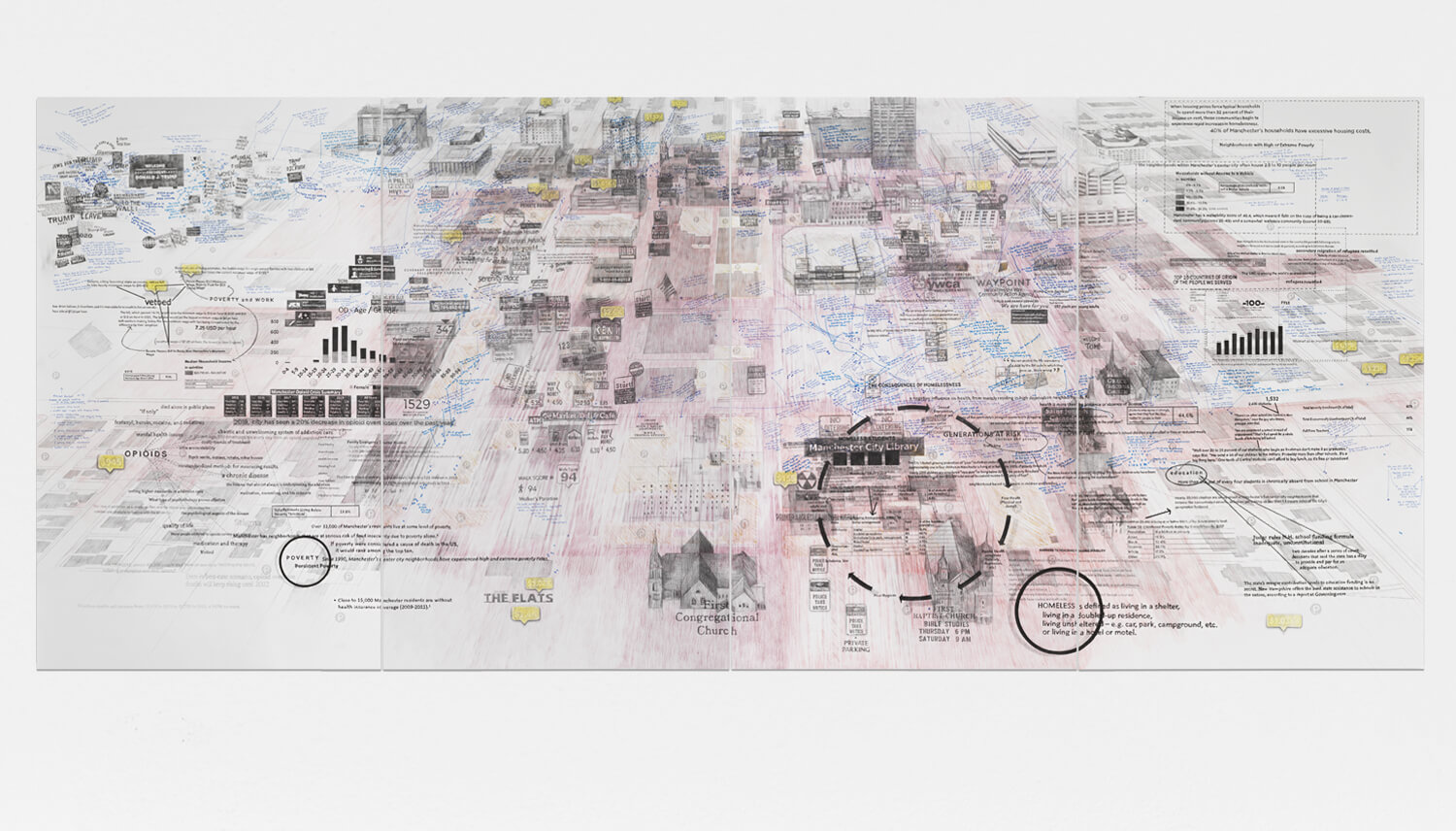
These large-scale diagrammatic drawings examine society’s failure to support those living at the margins, including unhoused people, those living below the poverty line, and, in this case, individuals impacted by the opioid crisis. The works make visible the interconnected pathways that lead to poverty, reflecting difficult truths back to the communities they depict. The facts themselves are already known. Statistics on poverty, opioid use, school dropouts, and healthcare costs are readily available. The drawings function as a call to action by bringing these realities together within a single visual field, where their cumulative impact becomes impossible to ignore.
In Manchester, New Hampshire, public space is rendered dysfunctional by the dominance of car culture, the proliferation of parking lots, entrenched poverty, and an ongoing opioid crisis. These conditions leave many people struggling with housing insecurity, mental illness, and addiction to linger in parks and transit hubs that are not designed to support care or social connection. Societies suffer in the absence of well-designed and properly maintained public spaces. When public space functions well, it can foster togetherness and sustained social relations, counter inequality and polarization, and encourage collective responsibility. The work seeks to make these conditions visible while advocating for the urgent need for inclusive, thoughtfully designed public spaces.
This Is a Rehearsal, Chicago Architecture Biennial
Contraste et indifférence (Part 1), Foundation Grantham, Quebec